
Handheld UV Laser Marker Covers 7 Key Application Scenarios
Laser marking equipment has long been regarded as the domain of heavy-duty industrial machinery. But "professional" doesn't have to mean bulky or complicated. Weighing just 4 kilograms and powered by a 355nm UV laser source, the LZY Handheld UV Laser Marker brings high-precision marking capabilities out of the factory floor and into design studios, trade shows, and even outdoor job sites.
To help you envision how this portable tool fits into real-world production and creative workflows, we have compiled 10 typical application scenarios across diverse industries. See if any of them match the marking challenges you're currently facing.
Scenario 1: 3C Electronics & Precision Components
Challenge:
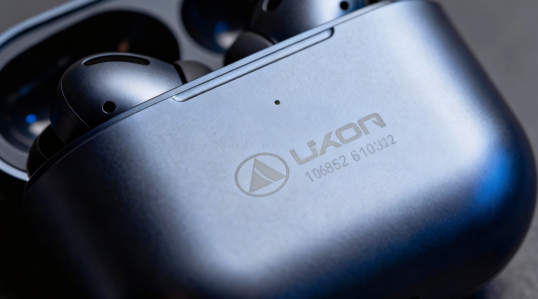
Components such as mobile phone back covers, connectors, buttons, and control panels are small in size and made from various materials—including metals, plastics, and coated glass. Markings must be sharp, free from melting, and must not damage surrounding circuits.
Solution:
The 355nm UV laser produces minimal thermal impact, delivering crisp white markings on plastics and high-contrast black or gray markings on metals. The 80×80mm marking range accommodates the majority of component sizes.
Typical Applications:
Mobile phone parts, precision connectors, automotive center-console buttons, function control panels.
Scenario 2: Glass & Artisan Crafts
Challenge:
Traditional infrared lasers often cause glass to crack or chip at the edges, while CO₂ lasers produce rough marks with poor fine-detail control.
Solution:
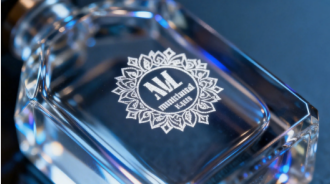
UV laser technology operates via a "cold processing" mechanism, creating a fine frosted effect on glass surfaces without risk of cracking. Suitable for flat glass, curved cup bodies, crystal ornaments, and more.
Typical Applications:
Wine glass engraving, surface marking on crystal gifts, mirror patterns, artistic signatures on decorative pieces.
Scenario 3: Metal Products
Challenge:
Markings on stainless steel, aluminum alloys, and titanium must be wear-resistant, corrosion-resistant, and highly contrasted. For applications such as jewelry, a smooth surface finish is also required.
Solution:
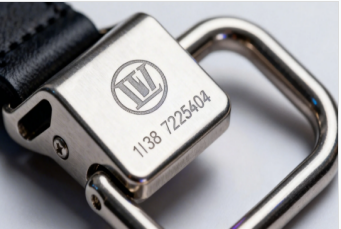
The UV laser forms oxide layers or microstructures on metal surfaces, producing black, gray, or white effects with varying contrast levels—all without deep etching, while maintaining a smooth tactile feel.
Typical Applications:
Stainless steel nameplates, aluminum alloy logos, metal keychains, inner-ring engravings on rings, outdoor hardware, multi-function tool markings, automotive interior parts.
Scenario 4: Packaging & Consumer Goods
Challenge:
Cosmetics, food, and gift packaging demand high aesthetic standards, while also requiring variable data such as production dates and QR codes.
Solution:
The handheld UV laser marker supports serial number automation and QR code generation with batch marking capabilities. The UV source delivers refined results on paper, plastic, coated surfaces, and wooden packaging.
Typical Applications:
Cosmetic tube logos, powder compact date codes, perfume bottle branding, tea box QR codes, anti-counterfeit marks on liquor packaging, custom markings on wooden gift boxes.
Scenario 5: Signage & Personalized Customization
Challenge:
Solo entrepreneurs, sign-making shops, and artisan studios need a single device that handles multiple materials, offers simple operation, and fits within a limited budget.
Solution:
At just 4 kg, with plug-and-play functionality, multilingual software, and a low learning curve, this system is ideal for small-batch, high-mix workflows that require frequent content changes.
Typical Applications:
Acrylic signs, leather tags, wooden keychains, jade pendants, plastic cards.
Scenario 6: Medical Device Marking
Challenge:
Surgical instruments, implantable devices, and medical consumables require permanent, biocompatible, and corrosion-resistant markings that comply with stringent UDI (Unique Device Identification) regulations.
Solution:
The UV laser's cold marking process prevents thermal damage to heat-sensitive medical materials, while delivering ultra-fine, high-contrast marks that meet FDA and EU MDR traceability requirements.
Typical Applications:
Surgical scalpel handles, orthopedic implants, syringe barrels, medical packaging, UDI barcodes.
Scenario 7: Automotive Parts & Mold Marking
Challenge:
Automotive components often feature curved surfaces, varying hardness levels, and require markings that withstand high temperatures, friction, and chemical exposure.
Solution:
The handheld design allows flexible positioning on non-flat surfaces, while the UV beam produces permanent, wear-resistant marks without compromising the structural integrity of the part.
Typical Applications:
Engine component labels, VIN plates, gear shift pattern indicators, mold cavity identification, interior trim logos.


